Total Pageviews
Saturday, 3 March 2012
Wednesday, 29 February 2012
HISTORY MAP ITEMS SA II
List of Map Items for Examination
A. History
Chapter 3 : Nationalism in India - (1918-1930)
(i) For location and labelling/Identification on Outline Political Map of India
1. Indian National Congress Session : Calcutta (Sep. 1920), Nagpur (Dec. 1920), Madras (1927)
and Lahore (1929).
2. Important Centres of Indian National Movement
(Non-cooperation and Civil Disobedience Movement)
(i) Champaran (Bihar) : Movement of Indigo Planters
(ii) Kheda (Gujarat) : Peasant Satyagraha
(iii) Ahmedabad (Gujarat) : Cotton Mill Workers Satyagraha
(iv) Amritsar (Punjab) : Jallianwala Bagh incident.
(v) Chauri Chaura (UP) : Calling off the NCM.
(vi) Bardoli (Gujarat) : No tax campaign.
(vii) Dandi (Gujarat) : Civil Disobedience Movement.
Sunday, 26 February 2012
Saturday, 25 February 2012
Thursday, 23 February 2012
MCQ -3 Mineral and Power resources
1. Panchpatmali has rich deposits of -------------------------
A. copper B, Bauxite C Iron- ore D Manganese
2. Which one of the following is not a non-metallic mineral?
A. Potash B Marble C. Mica D. Lead
3.. Minerals found in the crevices of igneous or metamorphic rocks in larger quantities are called as ------
A. Veins B lodes C. placer deposits D. All of the above
4. Which is the leading producer of manganese?
A. Rajasthan B. Jharkhand C. Madhya Pradesh D. Orissa
5. Koderma –Gaya –Hazaribagh belt is the producer of -----------------
A. Copper B. Bauxite C. Mica D. Limestone
6.. Which is the leading producer of Copper ?
A. Rajasthan B. Jharkhand C. Madhya Pradesh D. Karnataka
7.In Which of the following manufacturing manganese used ?
A. Steel B. Paints C. Insecticides D. All of the above
8. Rat hole mining is done in -------------------
A. Karnataka B. Meghalaya C. Chhattisgarh D. Jharkhand
9. Which one of the following Mica widely used ?
A. Electrical Industry B. Cement Industry C. Iron-steel industry D. All of the above
10. Which one of the following port specializes in the export of iron-ore from Kudremukh mine?
A. New Mangalore port B. Marmagao C. Vishakhapatnam D. Mumbai
MCQ -2 Mineral and Power resources
- Which one of the following state is the leading producer of Bauxite ?
- Rajasthan B. Jharkhand C. Madhya Pradesh D. Orissa
- Balaghat mine is an important mine of -----------
A. . Rajasthan B. Jharkhand C. Madhya Pradesh D. Orissa
3. Kudremukh is an important ------------------------- mine
A. copper mine B, Bauxite mine C Iron- ore mine D Manganese mine
4. Minerals found in the crevices of igneous or metamorphic rocks in small quantities are called as
A. Veins B lodes C. placer deposits D. All of the above
5. Which is the leading producer of manganese?
A. Rajasthan B. Jharkhand C. Madhya Pradesh D. Orissa
6. Khetri is important for its --------------------
A. Iron –ore mine B. Lignite mine C. Mica mine D. Copper mine
7. Which one of the following mineral is an important raw material for the cement industry?
A. Mica B. Bauxite C. Manganese D. Limestone
8 In Which of the following manufacturing manganese used?
A. Steel B. Paints C. Insecticides D. All of the above
9. Where is Bailadila mine located?
A. Madhya Pradesh B. Chhattisgarh C. Jharkhand D. Orissa
10. Which one of the following is not a metallic mineral?
A. Sulphur, B. Lead C. Bauxite D. Nickel
MCQ from chapter mineral and power resources
- Which one of the following is the softest mineral ?
- Magnetite B. Limestone C.Talc D. Mica
2. In which of the following the mineral deposits are called placer deposits ?
A. Occurrence of copper in the cracks of igneous rocks
B Occurrence of gypsum found in the arid regions
C.Bauxite formed by the decomposition of surface rocks
D..Occurrence of silver brought by river at the base of a hill
3.Which one of the following is not a metallic mineral ?
A. Sulphur, B. Lead C. Bauxite D. Nickel
4. Which one of the following is a Ferrous mineral ?
A. Manganese B. Copper C. Platinum D. Granite
5.Which of the following mineral is found in Khetri mines ?
A. Manganese B. Coal C. Copper D. Iron
6. Which is the leading producer of Copper ?
A. Rajasthan B. Jharkhand C. Madhya Pradesh D. Karnataka
7. Which one of the following is the iron ore mine of Karnataka ?
A. Bailadila B. Durg C. Mayur Bhanj D. Kudremukh
8. From which one of the following mine iron ore ,exported through Vishakhapatnam port
A. Bailadila B. Kudremukh C. Bellary C. Badampahar
9. Which one of the following is not an ore of iron?
A . Bauxite B.Hematite C. Magnetite D. Iron pyrite
10. Which of the following mineral is found in Koderma, Gaya ,Nellore ?
A. Bauxite B. Copper C. Limestone D. Mica
Monday, 19 December 2011
ECONOMICS -CONSUMER RIGHTS - I
Q1. Why are rules and regulations required in the marketplace? Illustrate with a few examples.
l Individual consumers often find themselves in a weak position.
l Whenever there is a complaint regarding a good or service that had been bought, the seller tries to shift all the responsibility on to the buyer.
l Their position usually is – “If you didn’t like what you bought, please go elsewhere”.
l Markets do not work in a fair manner when producers are few and powerful whereas consumers purchase in small amounts and are scattered
Q2. Enlist various ways by which consumers get exploited in the market.
l Sometimes traders indulge in unfair trade practices such as when shopkeepers weigh / measure less than what they should.
l When traders add charges that were not mentioned before.
l When adulterated/defective goods are sold.
l When giving sub standard quality.
l When the shopkeeper behave roughly.
l When there is lack of safety devices in electrical goods.
l When false information is passed on through the media, and other sources to attract consumers.
l For example, a company for years sold powder milk for babies all over the world as making false claims this to be better than mother’s milk.
l Many times producers are not ready to write warning on their products e.g. cigarette companies.
Q3. Mention three factors which gave birth to consumer movement in India
l The consumer movement arose out of dissatisfaction of the consumers, as many unfair practices were being indulged in by the sellers.
l There was no legal system available to consumers to protect them from exploitation in the marketplace.
l It was presumed that it was the responsibility of consumers to be careful while buying a commodity or service.
l There was no awareness amongst people regarding their duties and rights.
l It was presumed that the sellers has the responsibility of ensuring quality of goods and services
Q4. Trace the evolution of consumer movement in India . /Critically examine the progress of consumer movement in India .
Ants:
l In India , the consumer movement as a ‘social force’ originated with the necessity of protecting and promoting the interests of consumers against unethical and unfair trade practices.
l Rampant food shortages, hoarding, black marketing, adulteration of food and edible oil gave birth to the consumer movement in an organised form in the 1960s.
l Till the 1970s, consumer organisations were largely engaged in writing articles and holding exhibitions. They formed consumer groups to look into the malpractices in ration shops and overcrowding in the road passenger transport.
l Because of all these efforts, the movement succeeded in bringing pressure on business firms as well as government to correct business conduct which may be unfair and against the interests of consumers at large.
Q5. What should be the role of the government to protect consumers? Explain .
Ans:
l The government should make rules and regulations.
l The government should get these rules enforced strictly.
l Defaulters should punished severely
l Government should educate people about their rights and duties as consumers.
Q6. Name three measures adopted by the government to protect consumers
Ans:
l Legislative measures- A major step taken in 1986 by the Indian government was the enactment of the Consumer Protection Act 1986, popularly known as COPRA.
l Administrative measures- PDS or Fair Price shops
l Technical measures- ISI, AGMARK, BIS, HALLMARK
Q7. Mention your responsibilities as a consumer
Ans:
l Look at the quality of the product
l Ask for guarantee card
l Ask for cash memo
l Check the quantity of the product
l To check the date of manufacturing
l To check the date of expiry
l Check the MRP
l To check the seal of ISI, BIS , Agmark
Wednesday, 23 November 2011
Tuesday, 22 November 2011
MAP SYLLABUS -MANUFACTURING INDUSTRIES
FOR LOCATING AND LABELLING ONLY
1. Cotton Textile Industry : Mumbai,Indore,Ahmedabad,Surat,Kanpur,Coimbatore and Madurai
2. Woollen Industries : Srinagar,Amritsar,Ludhiana,Panipat,Mirzapur and Jamnagar
3. Silk Industry : Anantnag,Srinagar,Murshidabad and Mysore
4. Iron and Steel Plants :Burnpur,Durgapur,Bokaro,Jamshedpur,Rourkela,
Bhilai,Vijaynagar,Bhadravati,Vishakhapatnam and Salem
5. Software Technology Parks :Mohali, Noida,Jaipur,Gandhinagar,Indore,Mumbai,Pune, Kolkata,Bhubaneshwar,Vishakhapatnam,Hyderabad,Bangalore,Mysore,Chennai and Thiruvananthapuram
1. Cotton Textile Industry : Mumbai,Indore,Ahmedabad,Surat,Kanpur,Coimbatore and Madurai
2. Woollen Industries : Srinagar,Amritsar,Ludhiana,Panipat,Mirzapur and Jamnagar
3. Silk Industry : Anantnag,Srinagar,Murshidabad and Mysore
4. Iron and Steel Plants :Burnpur,Durgapur,Bokaro,Jamshedpur,Rourkela,
Bhilai,Vijaynagar,Bhadravati,Vishakhapatnam and Salem
5. Software Technology Parks :Mohali, Noida,Jaipur,Gandhinagar,Indore,Mumbai,Pune, Kolkata,Bhubaneshwar,Vishakhapatnam,Hyderabad,Bangalore,Mysore,Chennai and Thiruvananthapuram
Friday, 11 November 2011
CLASS X CHAPTER 5 MINERALS AND ENERGY RESOURCES PART I
1 What is a mineral?
Ans. Minerals are a “homogenous, naturally occurring substance with a definable internal structure.” Minerals are found in varied forms in nature, ranging from the hardest diamond to the softest talc
2. What are the basis of classification of minerals by the geologists.
Ans. Geologists use the properties such as colours, hardness, crystal forms, lustre and density to classify the minerals.
3 What are ores?
Ans. Minerals found in their raw form is called as “ores”. That means ore is an accumulation of any mineral mixed with other elements.
4 Mention any two factors which determine the extraction of minerals.
Ans. Extraction of any mineral depends upon its commercial viability
Commercial viability depends on the following factors:
1. Concentration: The mineral content of the ore must be in sufficient concentration to make its extraction commercially viable.
2. Ease of extraction: The type of formation or structure in which they are found determines the relative ease with which mineral ores may be mined. This also determines the cost of extraction.
3. Market and demand of mineral makes some minerals more commercially viable.
5 Explain the main types of formations in which minerals occur.
Ans. Minerals generally occur in the following forms:
(i) In igneous and metamorphic rocks minerals may occur in the cracks, crevices, faults or joints. The smaller occurrences are called veins and the larger are called lodes. In most cases, they are formed when minerals in liquid/ molten and gaseous forms are forced upward through cavities towards the earth’s surface. They cool and solidify as they rise. Major metallic minerals like tin, copper, zinc and lead etc. are obtained from veins and lodes.
(ii) In sedimentary rocks a number of minerals occur in beds or layers. They have been formed as a result of deposition, accumulation and concentration in horizontal strata. Coal and some forms of iron ore have been concentrated as a result of long periods under great heat and pressure. Another group of sedimentary minerals include gypsum, potash salt and sodium salt. These are formed as a result of evaporation especially in arid regions.
(iii) Another mode of formation involves the decomposition of surface rocks, and the removal of soluble constituents, leaving a residual mass of weathered material containing ores. Bauxite is formed this way.
(iv) Certain minerals may occur as alluvial deposits in sands of valley floors and the base of hills. These deposits are called ‘placer deposits’ and generally contain minerals, which are not corroded by water. Gold, silver, tin and platinum are most important among such minerals.
(v) The ocean waters contain vast quantities of minerals, but most of these are too widely diffused to be of economic significance. However, common salt, magnesium and bromine are largely derived from ocean waters. The ocean beds, too, are rich in manganese nodules.
6 What is Rat-Hole Mining?
Ans. In the tribal areas of the north-east India , minerals are owned by individuals or communities. In Meghalaya, there are large deposits of coal, iron ore, limestone and dolomite etc. Mining in these areas is done by family member in the form of a long narrow tunnel, known as ‘Rat hole’ mining.
7 Which are the two types of mining
1. Surface mining -Which includes An open pit mine and quarrying
2. Sub-surface mining (An underground mine with shafts)
8 Describe the general distribution of mineral resources in India .
Ans. India has rich and a large variety of minerals.
a. Peninsular rocks contain most of the reserves of coal, metallic minerals, mica and many other non-metallic minerals.
b. Sedimentary rocks on the western and eastern coasts, in Gujarat and Assam have most of the petroleum deposits.
c. The rock systems of the Rajasthan have reserves of many non-ferrous minerals.
d. The vast alluvial plains of north India are almost without minerals.
e. These variations exist largely because of the differences in the geological structure, processes and time involved in the formation of minerals.
9 Give reason for the variation in the uneven distribution of minerals in India .
The variation in the uneven distribution of minerals in India . exist largely because of the differences in the geological structure, processes and time involved in the formation of minerals
Which are the two types of Iron ore found in India ?
Types of iron ore in India :
a. Magnetite is the finest iron ore with a very high content of iron up to 70 percent. It has excellent magnetic qualities.
b. Hematite ore has slightly lower iron content than magnetite (50-60 per cent). It is largest used type of iron ore in Indian industries
10 Describe the distribution of Iron ore in India
Distribution of iron ore:
a. The five largest iron producing states are Karnataka, Orissa, Chhattisgarh, Goa and Jharkhand.
b. Iron ore is found in the four belts
i. Orissa-Jharkhand belt: high grade hematite ore is found. Important mines are Badampahar and Singbhum mines.
ii. Durg-Bastar belt lies in Chhattisgarh and Maharashtra : Very high grade hematite are found. Famous mine are Bailadila which produces iron best suited for steel making.
iii. Bellary-Chitradurga-Chikmaglur-Tumkur belt in Karnataka has large reserves of iron ore.
iv. Maharashtra-Goa belt includes the state of Goa and Ratnagiri district of Maharashtra.
11 Name the mines and the ports through whichiron-ore is exported
Export of iron ore:
a. Hematite ore from Bailadila mines are exported to Japan and South Korea via Vishakapatnam port.
b. The Kudremukh mines located in the Western Ghats of Karnataka are a 100 per cent export unit. Kudremukh deposits are known to be one of the largest in the world. The ore is transported as slurry through a pipeline to a port near Mangalore.
c. Iron ore from Goa is not of very high quality, yet they are exported through Marmagao port.
12 What are the uses of Manganese ?
Uses of Manganese:
a. It is mainly used in the manufacturing of steel and ferro-manganese alloy.
b. Nearly 10 kg of manganese is required to manufacture one tonne of steel.
c. It is also used in manufacturing bleaching powder, insecticides and paints.
13 Name the leading producer of manganese in India
Orissa is the largest producer of manganese in India .
14. What are the uses of copper:
- Copper is malleable, ductile and a good conductor therefore it is mainly used in electrical cables, electronics and chemical industries
15 Which is the leading producer of Copper in India ?
Madhya Pradesh is the largest producer of copper in India
Distribution of copper:
a. Madhya Pradesh is the largest producer of copper in India . The Balaghat mines
in Madhya Pradesh produce 52 per cent of India ’s copper.
b. Rajasthan is the second largest producer of copper. The Khetri mines in Rajasthan are famous.
c. The Singbhum district of Jharkhand is also a leading producer of copper.
d. India is critically deficient in the reserve and production of copper.
17 What are the uses of Bauxite:
a. Bauxite is the ore which contain aluminium. It is from bauxite, a clay-like substance that alumina and later aluminium is obtained.
b. Aluminium is an important metal because it has strength of iron; it is extremely light, good conductor of electricity and great malleability.
c. It is used in electrical industries, aircraft manufacturing industries, utensils making, etc.
18 Describe the Distribution of Bauxite:
a. Orissa, Gujarat, Jharkhand and Maharashtra are the important bauxite producing states of India .
b. Orissa is the largest bauxite producing state in India with 45 per cent of the country’s total production in 2000-01. Panchpatmali deposits in Koraput district are the most important bauxite deposits in the state.
19 What are the uses of mica:
a. Mica has excellent di-electric strength, low power loss factor, insulating properties and resistance to high voltage.
b. Therefore, mica is one of the largest used mineral in electric and electronic industries.
20 Describe the Distribution of Mica:
a. Jharkhand is the leading producer of mica in India .
b. Mica deposits are found in the northern edge of the Chota Nagpur plateau.
c. It is also found in Rajasthan, the major mica producing area is around Ajmer .
d. Nellore mica belt of Andhra Pradesh is also an important producer in the country.
21 What are the uses of Limestone
Limestone is the basic raw material for the cement industry and essential for smelting iron ore in the blast furnace.
22 Describe the distribution of limestone in India
a . Limestone is found in rocks composed of calcium carbonates or calcium and magnesium carbonates.
b. It is found in sedimentary rocks of most geological formations.
c. Andhra Pradesh, Rajasthan, Gujarat, Tamil Nadu are the major limestone producing states of India .
23 What are the impacts of mining on the health of the miners and the environment?
Ans. Mining can become a killer industry. Its effects are:
a. The dust and noxious fumes inhaled by miners make them vulnerable to pulmonary diseases.
b. The risk of collapsing mine roofs, inundation and fires in coalmines are a constant threat to miners.
c. The water sources in the region get contaminated due to mining.
d. Dumping of waste and slurry leads to degradation of land, soil, and increase in stream and river pollution
24 Explain why the conservation of minerals is necessary in India .
Ans. Minerals are important for every country for its development. They need to be conserved.
a. Industry and agriculture depend upon mineral deposits.
b. Minerals are in insufficient quantities, just one per cent of the earth’s crust.
c. We are rapidly consuming mineral resources that required millions of years to be created and concentrated.
d. The natural rate of replenishment is very small in comparison to the present rates of consumption.
e. Mineral resources are non-renewable resources.
f. Rich mineral deposits in our country are short-lived.
g. Continued extraction of ores leads to increasing costs as mineral extraction.
25 Mention different steps or ways of conserving our mineral resources.
Ans. Minerals has to be conserved for the future generations.
a. A concerted effort has to be made in order to use our mineral resources in a planned and sustainable manner.
b. Improved technologies need to be constantly evolved to allow use of low grade ores at low costs.
c. Recycling of metals, using scrap metals and other substitutes are steps in conserving our mineral resources for the future.
Monday, 17 October 2011
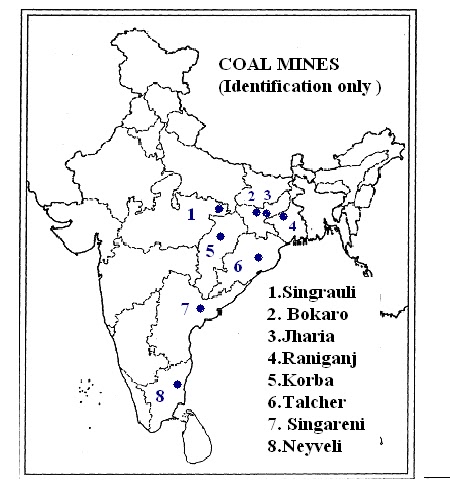
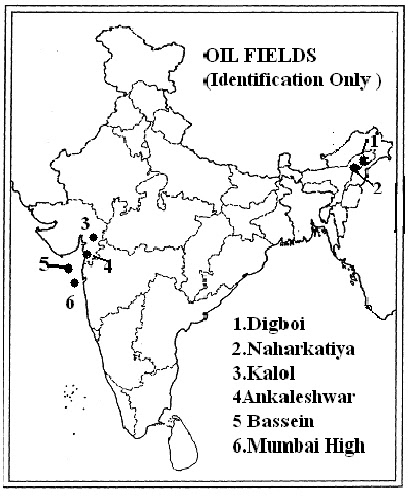
Mineral and Energy resource -Map Syllabus
Identification Only
Iron-ore - Mayurbhanj,Durg ,Bailadila,Kudremukh,Bellary
Mica-Ajmer,Bewar,Nellore,Gaya,Hazaribagh
Coal-Raniganj,jharia,Bokaro,Talcher,Jharia,Korba,Singrauli,Singareni,Neyveli
Oil-fields- Bassein,Mumbai High,Nahrkatiya,Digboi,Kalol,and Ankaleshwar
Power Plants (Locate and labelling only )
Thermal-Namrup,Talcher,Singrauli,,Harduaganj,Korba,Uran,Namrup,Ramagundam,Vijaywada,and Tuticorin
Nuclear-Narora,RawatBhata,Kakrapara,Tarapur,Kaiga,Kalpakkam
Wednesday, 28 September 2011
SYLLABUS FOR TERM II (SA II) CLASS X
GEOGRAPHY
5. Mineral and Energy Resources
6. Manufacturing Industries
7. Life Lines of National Economy
ECONOMICS
3. Money and Credit
4. Globalisation and The Indian Economy
5. Consumer RightsWednesday, 21 September 2011
MCQ ON WATER RESOURCES
M C Q
CHAPTER 3
WATER RESOURCES
1. Which one of the following multi purpose river valley project is constructed on River Mahanadi ?
A) Tehri B) Hirakud C) Rana Pratap Sagar D) ThungaBhadra
2) What is the name given to the diversion channels of the western Himalayas ?
A) Guls or Kuls B) Khadins C) Johads D)Phalodi
3. What is the name given to the agricultural fields, which were converted in to rainfed storage structures, in the semi-arid regions of Rajasthan?
A) Khadins B) Tankas C) Kuls D) Guls
4. What is Palar Pani as referred by the people of Rajasthan?
A) Milk B) River water C)Spring water D) Rain Water
5. Which one of the following state has made roof rainwater harvesting compulsory for all the houses across the state ?
A) Kerala B) Rajasthan C) Tamil Nadu D) Haryana
6. Which one of the river valley project has been constructed on River Satluj?
A) Tehri B) Salal C) Rana pratap Sagar D) Bhakra Nangal
7. Which dam is built on River Krishna ?
A) Periyar B) Mettur C) Nagarjuna Sagar D) Hirakud
8. Which one of the following is also called as the temples of modern India ?
A) Tankas B) Johads C) Dams D) Khadins
9. Which one of the following place has earned the rare distinction of being rich in harvested rainwater?
A) Gendathur B ) Phalodi C ) Bikaner D) Barmer
10. Which one of the following statement is true for a Multipurpose river valley project?
A) It can store the entire rain water received in a region
B) It fragment rivers, which makes it difficult for aquatic fauna to migrate
C) It will not affect the cropping pattern of a region
D) It will not affect the natural flow of a river
11. Narmada Bachavo Andolan was a
A) Social movement B) Industrial workers movement C) Movement for the construction of dam D) Water movement
12. Against the construction of which one of the following multipurpose projects was the Narmada Bachao Andolan launched?
A) Sardar Sarovar
B) Bhakra Nangal
C) Rihand
D) Tehri
13. Dams, Lakes and irrigation systems were extensively built during the reign of
A. Bimbisara B Harsha C Chandra Gupta maurya D. Ashoka
14 Krishna-Godavari dispute is due to the objections raised by the governments of
A) Karnataka and Andhra Pradesh
B) Karnataka and Tamil Nadu
C) Maharashtra- Andhra Pradesh
D) Kerala -Karnataka
ANSWERS
1 B)
Hirakud
2
A) Guls or Kuls
3 A) Khadins
4 D) Rain Water
5 C) Tamil Nadu
6 D)
Bhakra Nangal
7 C)
Nagarjuna Sagar
8 C) Dams
9 A)
Gendathur
10 B) It
fragment rivers, which makes it difficult for aquatic fauna to migrate
11. . A) Social movement
12.(A) Sardar Sarovar
13 C Chandra Gupta maurya
14 A) Karnataka and Andhra Pradesh
Thursday, 8 September 2011
Monday, 5 September 2011
economics chapter 2 sectors of indian economy contd.....
How to Protect Workers in the Unorganised Sector?
In the rural areas, the unorganised sector mostly comprises of landless agricultural labourers, small and marginal farmers
These farmers need to be supported through adequate facility for timely delivery of seeds, agricultural inputs, credit, storage facilities and marketing outlets.
In the urban areas, unorganized sector comprises mainly of workers in
small-scale industry, casual workers in construction, trade and transport
etc., and those who work as street vendors, head load workers, garment
makers, rag pickers etc.
Small-scale industry also needs government’s support for procuring raw material and marketing of output. The casual workers in both rural and urban areas need to be protected.
Why is Protection and support to the unorganised sector
workers necessary ?
Protection and support to the unorganised sector
workers is necessary for both economic and social development
These people are highly exploited by their employers
In India we have a large number of people both in the rural and urban areas working in the unorganised sector
Their social and economic upliftment is possible only if they are protected How to create more employment ?
Agricultural sector
employment for people in that area.It could be tourism, or
regional craft industry, or new services like IT.
Write a note on NREGA
- It is called National Rural Employment Guarantee Act 2005
(NREGA 2005).
- Under NREGA 2005, all those who are able to, and
are in need of, work have been guaranteed 100 days of employment
in a year by the government.
- If the government fails in its duty to provide employment, it will give unemployment allowances to the people.
- The types of work that would in future help to increase the
production from land will be given preference under the Act.
Subscribe to:
Posts (Atom)